Bubble Flow Aquatix · Planted tanks
Give your plants room to thrive.
CO₂ injection supplies the carbon your plants use to grow. Pair it with balanced lighting, nutrients, and circulation to build a thriving planted aquarium.
Your CO₂ setup, explained.
Explore the setup
Select a component to see what it does.
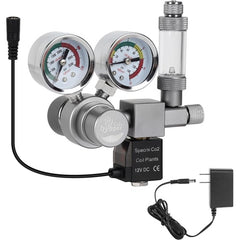
 01Regulator
Controls the gas supply from a compatible CO₂ cylinder. It reduces cylinder pressure, while the adjustment valve lets you fine-tune delivery. Check the cylinder connection and equipment pressure requirements.
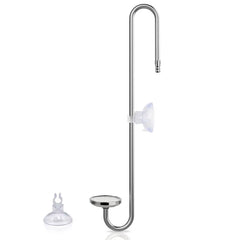
View regulator → 02Diffuser
Breaks CO₂ into fine bubbles so it can dissolve in the aquarium water. Position it where circulation can distribute CO₂ through the planted areas.
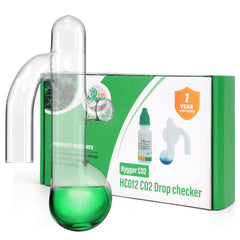
View diffuser → 03Drop checker
Provides a rough visual indication of dissolved CO₂ using a color-changing solution. It responds slowly, so it is not a real-time safety alarm or an exact concentration reading.
View drop checker →Light + carbon + nutrientsHealthy growth starts with balance.
Build your planted tank
Find your CO₂ essentials.


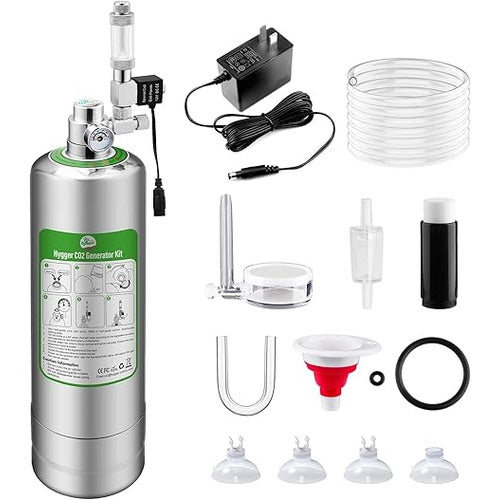
The setup, made simple
Every part has a purpose.
Cylinder & regulator
A compatible cylinder and regulator provide a controlled supply of gas. Check cylinder connection and diffuser pressure requirements before buying.
Solenoid & timer
A solenoid allows timed operation around your lighting schedule. Check whether it is included with your regulator.
Tubing & check valve
Use CO₂-rated tubing and a correctly oriented check valve to help prevent water from flowing back into the equipment.
Diffuser or reactor
Choose a device suited to your tank and filtration. Position it where circulation can distribute dissolved CO₂ through the plants.
Bubble counter
A visual reference for adjusting the gas flow. Bubble rate does not measure the CO₂ concentration in your aquarium.
Monitoring tools
Track pH, observe livestock, and use a suitable CO₂ test or drop checker as part of your routine. Drop checkers respond slowly.
Start with a routine
Consistency comes first.
1
Check compatibility
Follow the equipment instructions, secure the cylinder upright, and check connections for leaks before running the system.
2
Coordinate with your lights
Use a timer and solenoid. Start injection ahead of the lighting period and stop before lights out; fine-tune timing for your aquarium.
3
Adjust gradually
Begin conservatively. Observe livestock and monitor water conditions before making another change.
4
Maintain good circulation
Keep surface movement and flow through the planting. Clean the diffuser as directed to keep delivery consistent.
Good questions
Before you turn the gas on.
Does every planted tank need CO₂?
No. Many easy plants grow without injected CO₂. It becomes more useful when you want faster growth or keep plants with higher carbon demands.
How many bubbles per second should I use?
There is no universal setting. Tank size, circulation, equipment, and gas exchange all affect the result. Adjust gradually and monitor the aquarium.
Should I leave CO₂ on overnight?
For a typical pressurized planted-tank setup, use a timer and solenoid to coordinate injection with the lighting period. Plants do not use CO₂ for photosynthesis in the dark.
Can I rely on a green drop checker?
Use it as a rough, delayed indicator, not a real-time safety alarm or an exact concentration reading. Follow the solution instructions and monitor livestock too.
Further reading: Tropica plant care · The 2Hr Aquarist CO₂ guide
Grow your next aquascape
Make room for more green.
Explore CO₂ equipment for your planted aquarium.